
Aggression and Combative Intent
By Hunter “Chip” Armstrong

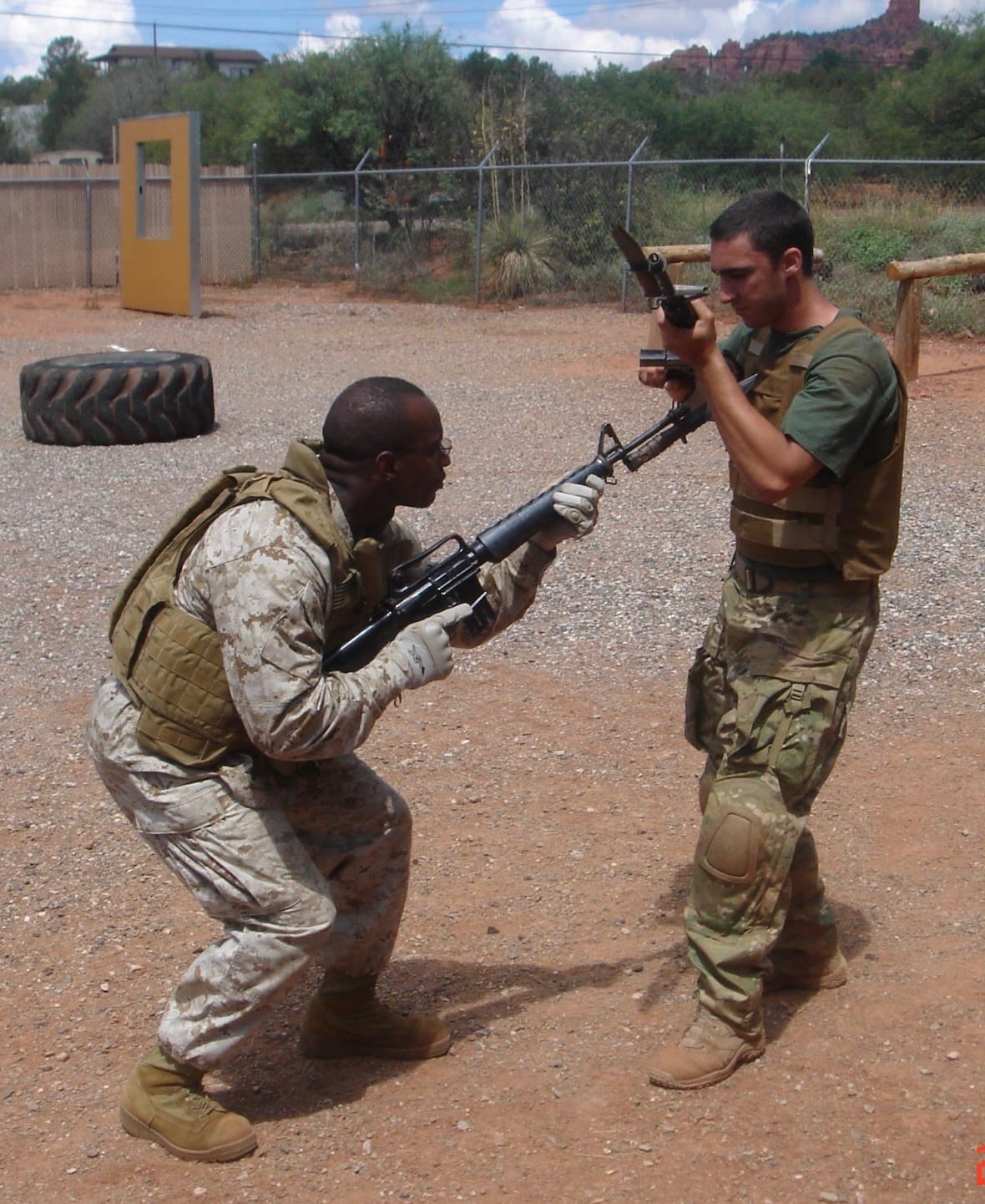
Throughout history, and likely prehistory as well, when close combat encounters occur, as often as not the primary point of failure is not in mechanical skill. It is in the behaviors of the mind. Another way to put that is that more often than not, success in combat is achieved through the determination of the calmed mind.
A common misconception in the modern approach to combative engagement is the belief that engagement outcome is primarily determined by the technical skills and the physical capabilities of those engaged. This, of course, is natural, particularly for an outside observer. For the spectator, the most obvious elements of the combative engagement would be those that can be visually observed: the agility and speed of movement, along with complexity of action are the elements that are most easily caught by the eye. Mental activity behind all those actions are virtually invisible to outside viewers; we tend not to see calmness of mind and deliberations of intent. Most most of those who engage in combative training are more than happy to concentrate on the more visually apparent elements of combat training.
There is indeed a certain satisfaction and sense of attainment gained in spending time, effort, and money in focusing on the physical experience of combat training.
Training is a necessity for any significant physical endeavor. For many types of physical activity that we are involved in today—sports and other forms of physical recreation—there is typically a larger demand on the development of physical capability than on attributes of the mind and character. However, in the realm of real world combat, whether it be military (martial), law enforcement, or simply self and/or community protection, training the mind and character is at least important as training physical skill. Here, among the higher realms of classical combative training, there is the assumption that the development of mind and character are necessary aspects enhancing the physical capability necessary to survive and dominate the context of lethal threat.
Our era of video games has programmed many of us to assume that if a crisis occurs, that externally acquired skills (and weapons) will be sufficient for any threat. As though preparation for a combat engagement is like a software program—as if downloading the correct physical movements into their muscle memory is enough to override a lifetime of peaceful real world conditioning. It is an illusion.
To survive and dominate in the pervasive and tragic spectrum of harm that is combat violence, you cannot rely on physical skills based on motor movement memory alone. You must understand, cultivate, and command a deliberate mental shift: the transition from passive awareness to an active mind of structured combative intent.
