
The Tabata Protocol and Weapons Wielding: Conditioning the Weaponed Mind and Body
By Hunter “Chip” Armstrong

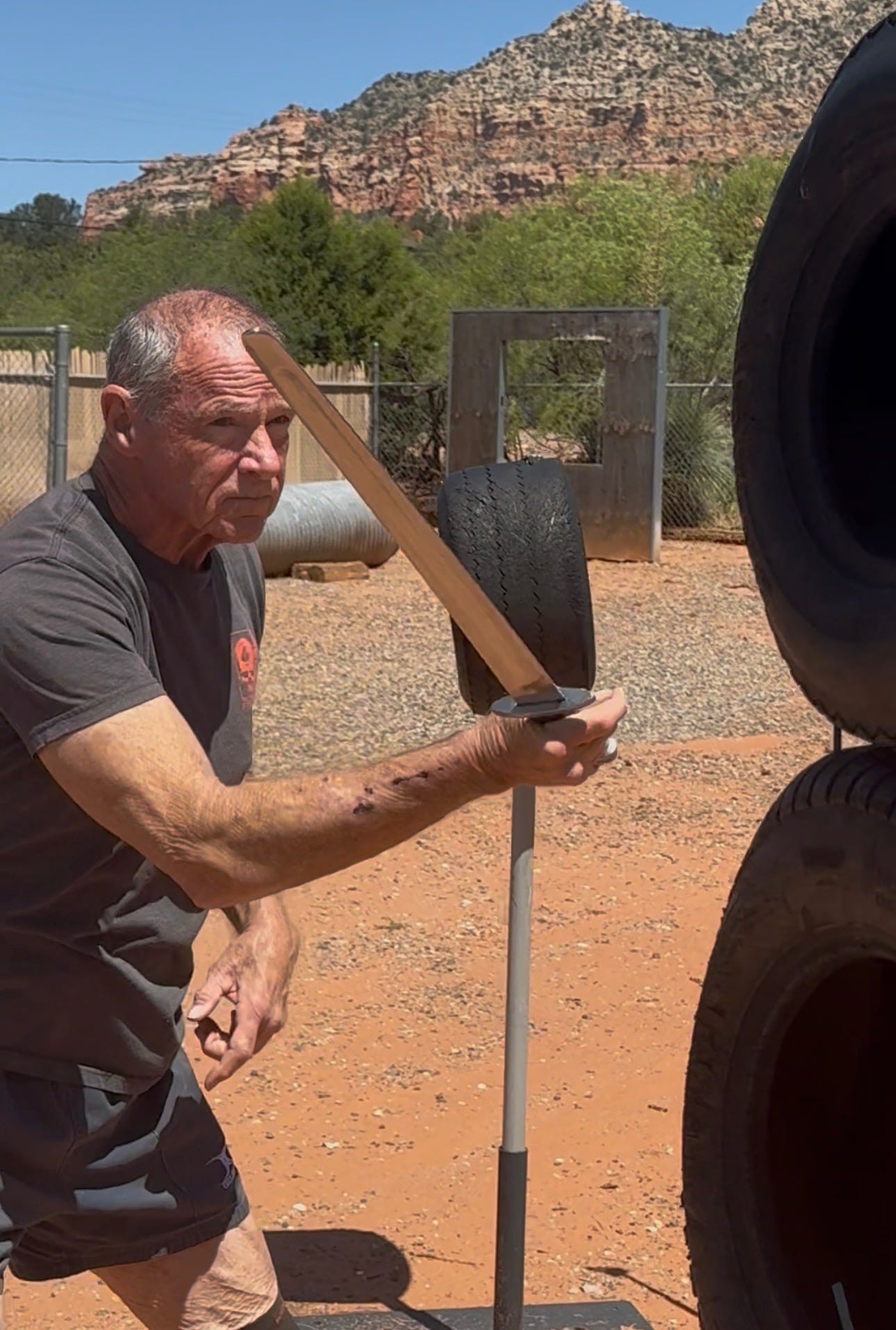
The Weapons Tabata
The Tabata protocol—20 seconds of maximum effort followed by 10 seconds of rest, repeated for eight rounds—is well recognized as an effective means of training cardiovascular and anaerobic endurance. And, at Spartan Training Center, we have found that with the right approach, it can be effective for training important strength conditioning specifically for body and mind attributes in weapons use.
Typically, the Tabata protocol is used in conventional fitness for short term, high intensity workouts with stationary bikes, bodyweight movements, or other conditioning tools; it is generally aimed at aerobic and anaerobic conditioning. But when applied to weapons wielding, the objective shifts from simple physical training fatigue to something substantially more critical to combative outcomes: maintaining psychological and structural integrity under acute stress.
Fighting Fatigue (pun intended)
In a real-world confrontation, except for well trained professionals, fatigue begins setting in almost immediately. Adrenaline spikes, peripheral vision narrows, and the fine motor skills required to manipulate a weapon all quickly begin to decline. If you only practice the structure of combat actions when you are fresh and comfortable, you are training for an illusion.
Training with weapons in a high-intensity interval format can help prepare the individual to confront the reality of the dynamic high physical and mental stress of combat action.
(Above video; Emphasis on hard strike, immediate recovery, followed by another strike.)
Training the Mind Under Fire
The highest stress demand of a weapons-wielding Tabata isn’t just the physical burn; it is the forced transition between chaotic output and immediate stillness.
The 20-Second Work Phase: Whether performing continuous aggressive striking, rapid target transitions, or explosive movement drills, the goal is maximum intensity while maintaining as efficient strikes, recoveries, and follow up strikes as possible. The individual is training the body to move with lethal efficiency, incorporating multiple heavy strikes, moving from target to target while the heart rate skyrockets.
The 10-Second Rest Phase: This is where the real stress training of the martial mind happens. In those ten seconds of gasping for air, the individual does not stop and take a resting position. While switching hands, with a non-stopping mind, he stabilizes mind, body, and weapon, controlling breathing and focusing intent. This is not a rest, it is 10 seconds to prepare the body and brain for the continuation of high intensity movement. The mind is unceasingly assessing, watching everything.
(Above video; Double and triple strikes followed by smooth transition to the next target)
Forging
By compressing the work-to-rest ratio, we condition the central nervous system to drop back into a state of hyper-awareness and control, even when the lungs are on fire.
We do not use intervals simply as a means of conditioning, but more to ensure that when the body is pushed to its absolute physical limit, the weapon remains an extension of a calm, deliberate, and seamless mind.
Do you think that this would translate to doing koryu kata with 10 second breaks between each one?